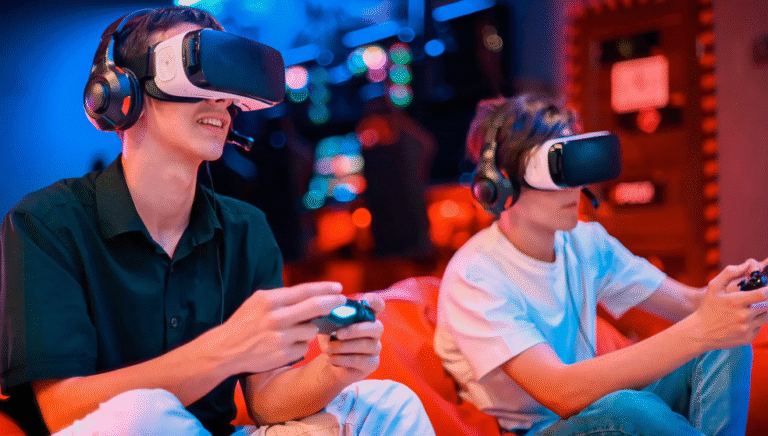
How VR Is Creating Immersive Gaming Worlds

Virtual Reality is reshaping the gaming industry by crafting intricate worlds that immerse players in unparalleled experiences. Advanced hardware and meticulous design create environments filled with lifelike characters and stunning visuals. This innovation not only enhances realism but also fosters emotional connections among players. As technology continues to evolve, the potential for even deeper engagement beckons. The question remains: how far can these immersive experiences push the boundaries of gaming?
The Evolution of Virtual Reality in Gaming
As technology advances, the evolution of virtual reality (VR) in gaming reveals a fascinating journey from rudimentary simulations to fully immersive experiences.
Hardware advancements have propelled VR into a new era, allowing developers to craft intricate worlds.
Coupled with innovative storytelling techniques, these advancements enable players to experience narratives in unprecedented ways, granting them the freedom to explore and interact within vibrant digital realms.
See also: How Virtual Reality Is Changing Entertainment
Creating Realistic Environments and Characters
Immersive gaming worlds thrive on the intricate design of realistic environments and characters, which serve as the foundation for player engagement.
Realistic textures bring surfaces to life, while dynamic lighting enhances atmospheric depth, creating a vivid backdrop for exploration.
This meticulous attention to detail not only captivates players but also fosters a sense of freedom, allowing them to experience alternate realities with unparalleled authenticity.
Enhancing Player Interaction and Engagement
The integration of virtual reality technology revolutionizes how players interact with gaming worlds, paving the way for unprecedented levels of engagement.
This immersive landscape fosters rich social dynamics, where players forge genuine connections through cooperative gameplay.
The Future of VR Gaming Experiences
With the ongoing advancements in virtual reality technology, the future of VR gaming experiences promises to redefine the boundaries of player immersion and interactivity.
Anticipated AI integration will enable adaptive narratives, enhancing emotional engagement.
Furthermore, innovative multiplayer dynamics will foster collaborative worlds, where players can forge meaningful connections.
This evolution heralds a new era of freedom, creativity, and limitless exploration in virtual realms.
Conclusion
As Virtual Reality continues to evolve, it is clear that the gaming landscape is being reshaped, crafting experiences that pull players into richly woven narratives and stunning visuals. With each technological leap, developers are breaking new ground, ensuring that players are not just spectators but active participants in their own adventures. As the sun sets on traditional gaming, a new dawn rises, promising immersive worlds where players can truly lose themselves in the magic of virtual realms.